Bakuchiol (CAS 10309-37-2): The Ultimate Guide to Benefits, Applications, Retinol Comparison & Buying Guide (2026)
Jun 30, 2026
Bakuchiol (CAS 10309-37-2): The Ultimate Guide to Benefits, Applications, Retinol Comparison & Buying Guide (2026)
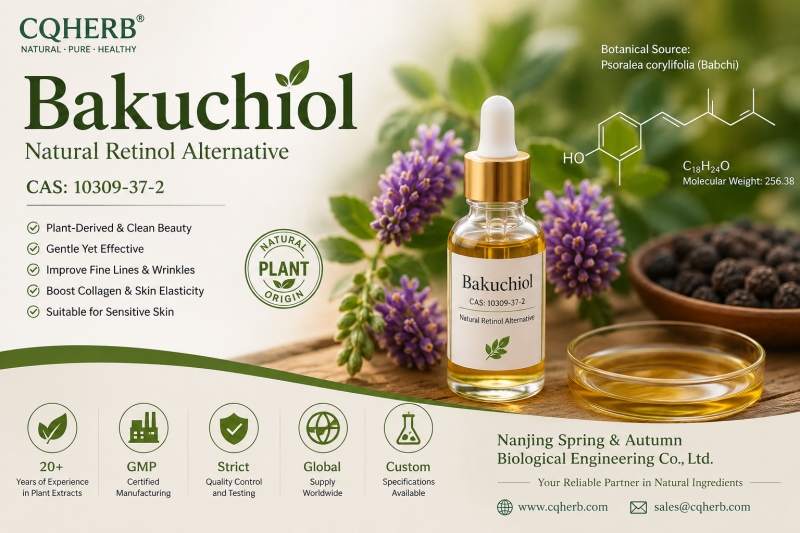
Natural Retinol Alternative for Next-Generation Cosmetic Formulations
Improve Skin Texture • Support Collagen Production • Gentle for Sensitive Skin • Ideal for Premium Skincare Products
Quick Answer
Bakuchiol (CAS 10309-37-2) is a naturally occurring meroterpene extracted primarily from the seeds and leaves of Psoralea corylifolia (commonly known as Babchi). Over the past decade, it has become one of the most sought-after botanical active ingredients in the global cosmetic industry due to its ability to deliver retinol-like anti-aging benefits with significantly improved skin tolerance.
Scientific studies indicate that Bakuchiol can help reduce the appearance of fine lines and wrinkles, improve skin elasticity, enhance skin firmness, and support collagen synthesis. Unlike traditional retinoids, Bakuchiol is generally well tolerated by sensitive skin and is less likely to cause redness, peeling, or irritation, making it a preferred choice for modern skincare formulations.
Today, Bakuchiol is widely incorporated into anti-aging serums, facial creams, eye treatments, facial oils, masks, and clean beauty products. As consumer demand continues to shift toward plant-derived and sustainable cosmetic ingredients, Bakuchiol has become one of the fastest-growing active ingredients in premium skincare worldwide.
Key Takeaways
Naturally derived cosmetic active ingredient from Psoralea corylifolia.
CAS Number: 10309-37-2.
Recognized globally as a leading natural alternative to retinol.
Supports collagen production and improves visible signs of skin aging.
Provides antioxidant and soothing benefits for sensitive skin.
Compatible with modern cosmetic ingredients such as niacinamide, peptides, ceramides, and hyaluronic acid.
Widely used in clean beauty, vegan, and premium skincare formulations.
Increasingly adopted by international cosmetic brands seeking plant-based anti-aging solutions.
Available in high-purity cosmetic-grade specifications for formulation development and commercial production.
Who Should Read This Guide?
Whether you are a cosmetic formulator, skincare brand owner, ingredient distributor, purchasing manager, or research professional, this guide provides comprehensive and practical information about Bakuchiol.
In this guide, you will learn:
What Bakuchiol is and why it has become a popular cosmetic ingredient.
How Bakuchiol differs from retinol.
The latest scientific understanding of its anti-aging properties.
Common cosmetic applications and formulation considerations.
How to evaluate product quality and choose a reliable supplier.
Frequently asked questions from cosmetic manufacturers and international buyers.
Our goal is to provide a practical resource that supports both technical understanding and purchasing decisions.
Why Is Bakuchiol Receiving Global Attention?
The global skincare market has undergone a significant transformation over the past decade. Consumers are no longer satisfied with products that simply promise visible results—they increasingly seek ingredients that combine proven efficacy, excellent skin compatibility, and naturally derived origins.
Retinol has long been regarded as the gold standard for anti-aging skincare. However, many consumers experience undesirable side effects such as dryness, redness, peeling, and increased photosensitivity, particularly those with sensitive or compromised skin barriers.
These limitations have encouraged cosmetic researchers and formulators to search for botanical alternatives capable of delivering comparable cosmetic benefits with improved tolerability.
Bakuchiol has emerged as one of the most promising answers to this demand. Although its chemical structure differs completely from vitamin A derivatives, numerous scientific investigations have shown that Bakuchiol can influence several biological pathways associated with skin renewal, collagen metabolism, and wrinkle reduction. This unique combination of efficacy and skin friendliness has positioned Bakuchiol as a preferred ingredient for modern anti-aging formulations.
At the same time, the rapid growth of clean beauty, vegan cosmetics, and naturally derived skincare products has further accelerated the commercial adoption of Bakuchiol across North America, Europe, Japan, South Korea, and other major cosmetic markets.
What Is Bakuchiol?
Bakuchiol is a naturally occurring meroterpene phenol isolated primarily from the seeds and leaves of Psoralea corylifolia, a medicinal plant traditionally used in Asian herbal medicine for centuries. While the plant has a long history in traditional healthcare, Bakuchiol itself has gained widespread recognition only in recent years as scientific research has revealed its remarkable cosmetic potential.
Unlike retinol, which belongs to the vitamin A family, Bakuchiol possesses an entirely different molecular structure. Nevertheless, modern biological studies suggest that it can regulate the expression of several genes involved in skin repair, extracellular matrix remodeling, and collagen production. This explains why many formulators describe Bakuchiol as a "natural retinol alternative," even though it is not chemically related to retinoids.
Its excellent compatibility with sensitive skin, combined with antioxidant activity and broad formulation flexibility, has made Bakuchiol one of the most valuable plant-derived active ingredients in premium cosmetic formulations.
Today, Bakuchiol is commonly found in:
Anti-aging facial serums
Firming creams
Eye creams
Moisturizers
Facial oils
Overnight repair treatments
Premium clean beauty products
Sensitive skin formulations
Its versatility allows formulators to create effective skincare products for consumers seeking visible anti-aging benefits while avoiding many of the limitations associated with traditional retinoids.
Chemical Identification
Property
Information
Product Name
Bakuchiol
CAS Number
10309-37-2
Molecular Formula
C18H24O
Molecular Weight
256.38 g/mol
Appearance
Pale yellow to amber viscous liquid
Botanical Source
Psoralea corylifolia Seeds
Solubility
Soluble in oils, ethanol, and many cosmetic solvents
Recommended Storage
Store in a cool, dry place away from direct sunlight
Shelf Life
Typically 24 months under recommended storage conditions
About CQHERB
Nanjing Spring & Autumn Biological Engineering Co., Ltd. (CQHERB) specializes in the research, production, and global supply of high-quality botanical extracts and cosmetic active ingredients. With extensive experience serving cosmetic manufacturers, ingredient distributors, and research institutions worldwide, we are committed to providing reliable raw materials supported by comprehensive technical documentation and consistent quality.
Our Bakuchiol is manufactured under strict quality management procedures to ensure excellent batch-to-batch consistency for formulation development and commercial production. Supporting documentation—including the Certificate of Analysis (COA), Technical Data Sheet (TDS), and Safety Data Sheet (SDS/MSDS)—is available upon request. We also offer flexible packaging options and customized supply solutions to meet the needs of global customers.
Table of Contents
Botanical Source of Bakuchiol
Extraction and Manufacturing Process
Physical and Chemical Properties
Mechanism of Action
Scientific Research and Clinical Studies
Benefits of Bakuchiol for Skin
Cosmetic Applications
Bakuchiol vs. Retinol: What's the Difference?
Formulation Guide
Safety and Stability
How to Choose a Reliable Bakuchiol Supplier
Frequently Asked Questions
References
阅读更多


 中文
中文


 支持IPv6网络